


Practical Knowledge About Kitchen Knives
- Cutting on an unsuitable surface such as glass or stone significantly shortens a knife's lifespan. It is best to use wood (end-grain is optimal) or plastic.
- Washing knives in the dishwasher.
- Wiping food off the cutting board with the blade can unnecessarily shorten a knife's lifespan because it "rolls" the edge. Instead, use the spine of the knife.
- Do not cut frozen food or bones unless the tool (usually not a knife) is designed for it.
- Store your knives in a blade guard, on a magnetic strip, or in a knife block so that they do not collide with each other in the drawer.
- For your own safety, do not open cans or hard plastic packaging. Kitchen shears, for example, are designed for this purpose.
- Do yourself a favor and do not buy cheap knives from hardware stores or supermarkets. Typically, only inferior knives are offered there. Initially, these "knives" may be very inexpensive and function satisfactorily, but the joy of these products quickly fades, and their maintenance and replacement are far more costly than investing in a good knife once.
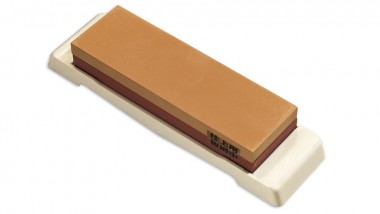
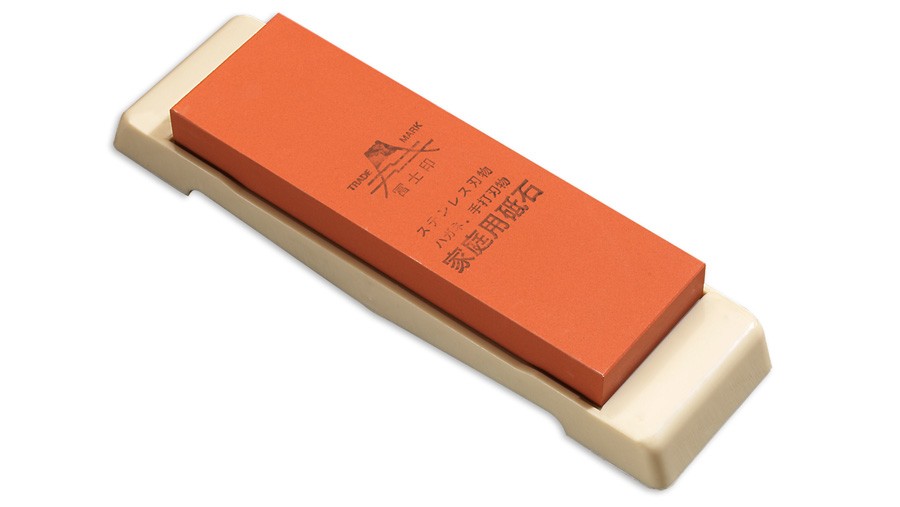
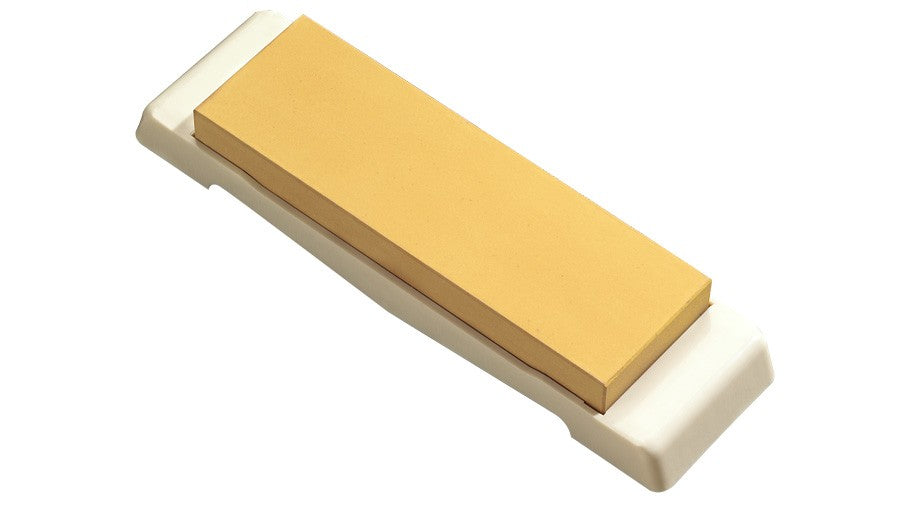
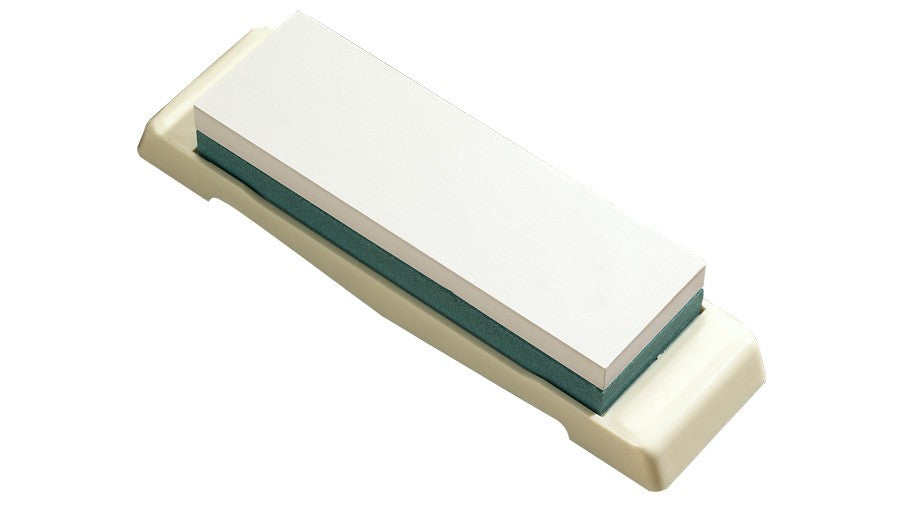
When should I use which sharpening stone grit?
Grit summary (Japanese standard, JIS scale):
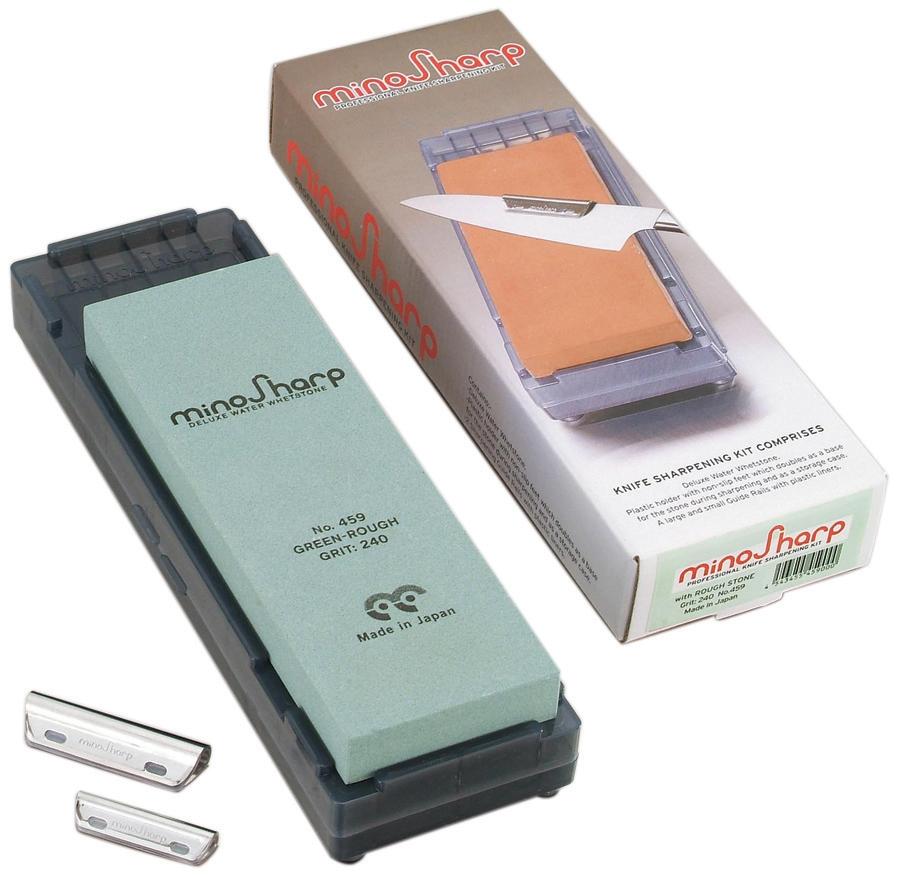
240: For coarse pre-sharpening to restore the blade geometry. For particularly dull knives or knives with chips.
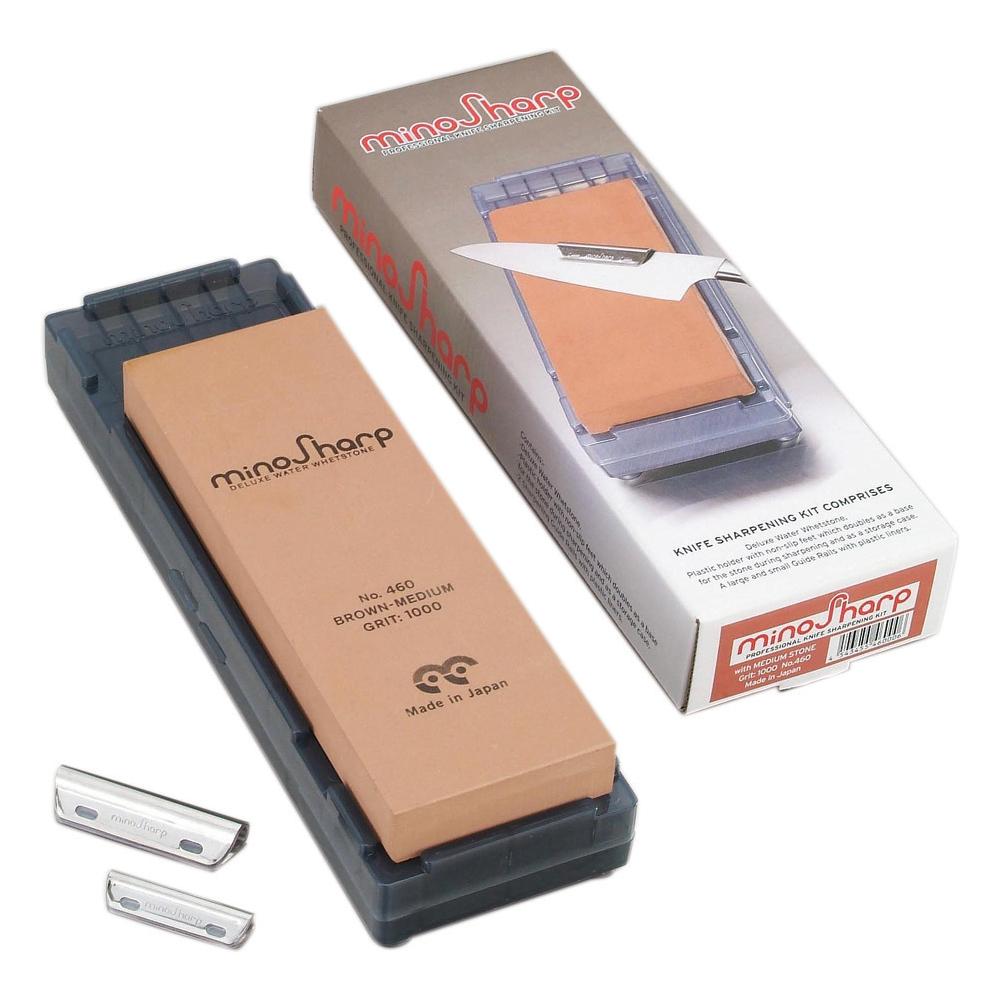
1000: For removing the burr or for honing the knife or straightening the edge.
3000: Used for fine sharpening and results in a finer edge. For knives that are still in good condition, you can also try this grit for simple honing.
6000: Ideal for polishing: only from this grit onwards does a razor-sharp blade emerge, which splits paper with pressure alone.
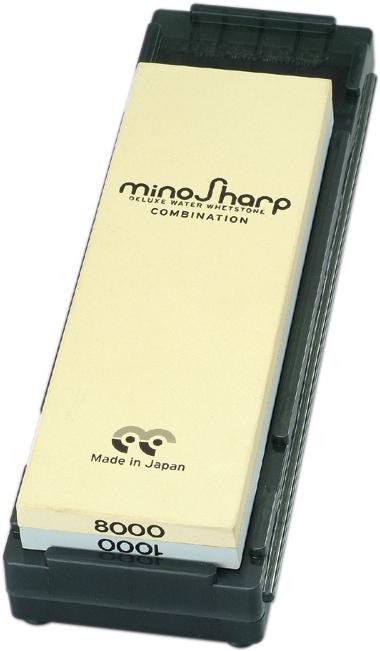
8000 – 12000: High-gloss polish for extremely fine edges. Only makes sense if you have a knife with very good steel or for straight razors that require an extremely fine edge (61° HRC+ or carbon steel).
Leather strop with honing paste: due to the elasticity of the leather, the edge becomes more stable. Depending on the grit of the honing paste, a good polish is achieved.
When should I use which sharpening tool?
How dull is the edge?
A truly dull edge can be identified by the fact that it reflects light when viewed from above. If the edge is very dull, it is advisable to pre-sharpen with a 240-grit stone until a burr forms. This is difficult for beginners to detect. With a little practice, even if it is very subtle, it can be seen with the naked eye. Otherwise, you can feel it by sliding your finger, from the spine of the knife towards the edge, over the edge (from the spine towards the edge). If you feel something rough, that is the burr. If the burr can be felt evenly across the entire cutting area, you can move on to a higher grit to remove it. 1000 grit is well suited for this. Depending on the desired sharpness, higher grits can also be used. The finer the edge, the better the knife "grips" the food being cut. For a particularly good result, a leather strop with honing paste is recommended. This can be used instead of a high-quality sharpening stone (approximately 6000 grit). It is also suitable for simply honing high-quality knives – depending on the condition of the edge.
How good is the steel?
The better the steel, the more it pays to invest in higher grit stones. Although a 1000 grit stone would certainly be sufficient, it would not do justice to the knife's potential. A leather strop with polishing paste is recommended in any case.
What is the difference between honing and sharpening?
Honing refers to straightening a bent knife edge. The bending of the edge can be caused by various processes. Most often, this happens when pushing food into the pan with the blade instead of the spine of the knife. Regular cutting also causes the edge to gradually bend. Then a honing steel or a sharpening stone is used. However, if a knife can no longer be sharpened by honing, the only option is to go to a professional or use a sharpening stone with the appropriate grit. A grit of 240 is usually used for this.
What are the differences between Japanese and European knives?
Basically, unless they are handmade or special editions, Japanese knives generally have the following advantages over their European counterparts:
Japanese knives are harder and therefore have a higher edge retention. An exception are chef's knives from the Japanese manufacturer Global (except for the SAI series), which are designed for the European market and are as hard as European chef's knives. Otherwise, Japanese knives are usually three-layered or more. The hard cutting layer is in the middle and is flanked by one or more layers of softer steel. These layers protect and stabilize the hard cutting layer and create an attractive pattern. This technique is also called San Mai. The use of high-quality steel also results in another advantage. Due to the finer structure of the steel, it can be forged thinner and subsequently ground thinner. This has the advantage of less resistance when cutting and the food itself has a finer cutting surface. This is noticeably evident, for example, when cutting onions, as you "cry" less. Another difference is that all Japanese knives can be maintained at home because no authentic Japanese knife has a bolster at the heel of the blade. This is the thickening present on almost all European knives. This bolster prevents the entire blade from being kept sharp, because firstly, you would damage your whetstone if you tried to straighten the bolster, and secondly, if you tried, it would take a very long time to achieve this.
How does a knife actually become dull and what can be done about it?
Firstly, the rate of wear depends on the technical characteristics of a knife. The harder and finer the cutting edge, the longer the knife stays sharp. The cutting angle and the intended use of the knife also influence the duration of sharpness. Secondly, sharpness depends on handling.
Below is a list of things to avoid:
- Cutting on an unsuitable surface such as glass or stone significantly shortens a knife's lifespan. It is best to use wood (end-grain is optimal) or plastic.
- Washing knives in the dishwasher.
- Wiping food off the cutting board with the blade can unnecessarily shorten a knife's lifespan because it "rolls" the edge.
- Do yourself a favor and do not buy cheap knives from hardware stores or supermarkets. Typically, only inferior knives are offered there. Initially, these "knives" may be very inexpensive and function satisfactorily, but the joy of these products quickly fades, and their maintenance and replacement are far more costly than investing in a good knife once.
Even if you avoid these four mistakes, you unfortunately cannot prevent a knife from becoming dull over time. Just as constant dripping wears away a stone, a knife will also dull over time even with correct use. How does this happen? The thinnest part of a knife is the edge. This (invisible) area gradually "bends" and must be regularly straightened by honing. Honing the knife with a honing steel (sapphire, ceramic, diamond-coated, or tungsten carbide) or a water or oil stone works very well for a certain period and can significantly extend a knife's functionality, but eventually the edge becomes so rounded that the edge geometry can only be restored with a water or oil sharpening stone. For the basic grind, it is best to use a sharpening stone with a grit of 240 and then work with finer grits (starting at 1000) to achieve a razor-sharp edge that you will enjoy again.